The Black Godfather: What Clarence Avant Teaches Us About Building Legacy in the Shadows

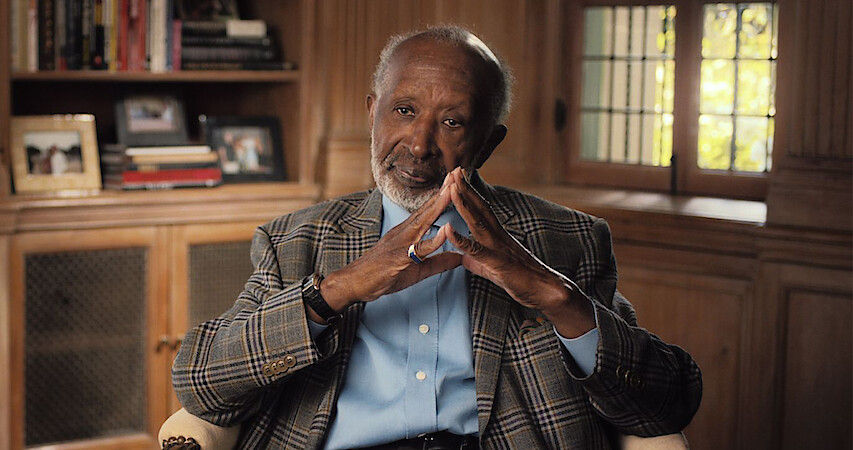
There's a documentary you need to watch. It's called The Black Godfather, and it will fundamentally change how you think about power, legacy, and what it means to build something that matters.
The film profiles Clarence Avant: a man whose name you might not recognize, but whose influence touches virtually everything you love about American culture. Music you've danced to. Artists you've admired. Political moments that shaped history. Corporate deals that broke racial barriers. All of it, in some way, flows through this man from Climax, North Carolina who left home at sixteen with a ninth-grade education and proceeded to build an empire so vast and interconnected that the filmmakers visualized it not as a network, but as a galaxy.
Not a solar system. A galaxy.
Because what Clarence Avant created wasn't just impressive: it was cosmic in scope. And he did it almost entirely in the shadows.
This is a story about how one person can transform the architecture of American culture without ever stepping into the spotlight. About how the most profound legacies are often built by people working behind the scenes. About walking through walls that everyone else accepts as permanent barriers.
But most importantly, this is a story about choice. The choice to refuse limitations. The choice to transform pain into purpose. The choice to pull others up while climbing. The choice to build meaning through authentic work rather than inherited status.
Let me show you how he did it, and what it means for how we build our own legacies.
The Man Who Took Doors Off Their Hinges
Pharrell Williams said it best in one brief interview moment that captures everything about Avant's methodology: "He didn't just open doors for us. He took the doors off the hinges and left them open."
Think about that distinction.
Opening a door means you knocked, someone let you in, and when you leave, the door closes behind you. The next person has to knock again. The barrier remains intact.
Taking the door off the hinges means restructuring the system itself. Once Avant walked through, the barrier couldn't be replaced. The opening stayed open. Permanently.
This is what he did across American culture: from sports to music to politics to corporate America. He didn't ask for permission to access power structures. He didn't petition for inclusion. He fundamentally altered the architecture of opportunity itself.
When Avant walked into a Coca-Cola executive's office to negotiate Hank Aaron's endorsement deal, he didn't use the chair. He walked up onto the desk, physically claiming the space before saying a single word. This wasn't aggression. It was a statement: "This is my desk now. This is my negotiation. Here's how this is going to go."
He got the deal. And years later, that executive called him for Michael Jackson "Bad" tour tickets. They remained friends. Because Avant understood something most people miss: you can be bold without being disrespectful. You can demand your worth without destroying relationships. You can take the door off the hinges while maintaining the integrity of the house.
This is what taking up space actually looks like. Not performative confrontation. Not burning bridges. But strategic repositioning of power dynamics that benefits everyone involved, including the person you're negotiating with.
Sussex Records: When You Name Your Company "Success and Sex"
Let me tell you about Avant's record label, Sussex Records, because the name itself is a masterclass in encoding your entire philosophy into two syllables.
At a speaking engagement, Avant challenged his audience: "Now as a Black guy, you say, 'Well why is it called Sussex Records?' Let me see how smart you people are. What did I name it Sussex Records?"
The room was silent.
His answer: "Two things in life: Success and Sex. What else matters?"
Sussex = Suc(cess) + (S)ex.
On the surface, "Sussex" sounds sophisticated. British. Establishment. The kind of name that could get past gatekeepers who might have dismissed something more obviously Black-owned in the 1960s.
But hidden in plain sight was Avant's actual worldview: Success (achievement, impact, building) and Sex (pleasure, vitality, connection, life force). Everything else, he argues, is either a subcategory of these two domains or a support structure for them.
This is classic Avant: hiding radical truth inside respectable packaging. The Columbo strategy. Appearing simple while being sophisticated. Taking what looks like a proper British name and making it a declaration of values that would have shocked conservative business circles.
Sussex Records signed Bill Withers and gave us "Lovely Day": a song that still plays in commercials, still evokes joy, still reminds us that one artist's authentic voice, properly supported, can echo across generations.
The label eventually went bankrupt.
Avant's response?
"So what, that's part of the game."
Because to him, life wasn't about perfecting one venture. It was about the portfolio. Try this, try this, try this. Some succeed (Sussex Records via Bill Withers), some fail (the label itself), but you keep moving. You keep building. Because as he said: "You keep going, you'll hit something."
"It Is What It Is": The Most Profound Philosophy You'll Ever Hear
Avant's daughter Nicole tells a story that cracked open the entire foundation of his operating system.
She was serving as U.S. Ambassador to the Bahamas, upset about some diplomatic situation, calling her father for emotional support. She wanted him to commiserate, to get angry with her, to validate her frustration.
Instead, he said: "Nicole, it is what it is."
She pushed back: "Dad, I understand that, but can you just come down to my level just for one second? Wallow with me."
His response: "No. It is what it is. And as soon as you figure out what it is, and as soon as you accept what it is, then you make the change after the acceptance of what it is. You can't change or propel yourself to move forward from a place of negativity or self-loathing."
Read that again. Slowly.
This is not resignation. This is radical acceptance as the prerequisite for effective action.
Most of us waste enormous energy denying reality, arguing with circumstances, spiraling in anger about things we can't control. Avant's framework demands something different:
Accept reality (it is what it is)
Understand it fully (figure out what it is)
Only then act (make the change)
You cannot change what you haven't accepted. You cannot move forward from a foundation of denial, rage, or victimhood. The acceptance comes first. The action follows.
This is how Avant survived eighty-eight years of operating in hostile systems without becoming bitter. He accepted reality — racism, barriers, rejection — as information, not identity. Then he acted from clarity rather than emotion.
When his radio station went bankrupt and he lost over a million dollars he didn't have? "It is what it is." He moved on. Built other things. Survived.
When Armand Hammer, the billionaire oil magnate, asked his net worth and essentially humiliated him for thinking they could be partners? "It is what it is." He learned from it. Adjusted strategy. Kept building.
This isn't about suppressing emotion. It's about refusing to let emotion dictate strategy. Feel what you feel. Then accept what is. Then act from clarity.
The University of Harlem: When Street School Beats Business School
Here's where Avant's story gets beautifully complicated.
Throughout most of the documentary and interviews, he wears his lack of formal education as a badge of honor: "I don't know, you people are in business school. I never was in business school. I was in Street school. I graduated with honors from the University of Harlem."
The room laughs. But he's serious.
Street School taught him ground rules. Survival. How to read power. How to navigate systems designed to exclude him. How to recognize opportunity. How to build relationships across impossible divides.
Joe Glaser — a white Jewish man connected to the mafia who managed Louis Armstrong —became his mentor. Glaser taught him "the matrix": the difference between the rules people claim to follow and the rules that actually govern how power works.
"Say as much as you can without stuttering," Glaser taught him. Meaning: speak with absolute conviction. The certainty with which you state something matters more than credentials. If you hesitate, you signal doubt. If you state it clearly, the number itself carries authority.
So when Avant walked into Mercury Records to discuss Jimmy Smith's contract, and they asked what he had in mind, he said without stuttering "$450,000."
The industry standard was $100,000.
The executive thought Avant had been "dropped on his head as a child." But Avant didn't defend the number. Didn't negotiate against himself. Just said it. Then left.
A month later, he came back: "I got my deal."
This is what Street School taught him that Business School couldn't: Boldness backed by silence is more powerful than justification backed by data.
But here's the twist.
Late in life, when asked what he'd do if starting over today, Avant said something that should make us all pay attention: "If I had my life to live over again, I think first of all—and I'm going to be very serious about this—education would be the number one thing on my mind. In this climate, I would want to be in investment banking. I like numbers."
This isn't regret. It's wisdom.
He's not saying his path was wrong for his era. He's saying his path wouldn't work as well today. The back windows he climbed through in the 1950s and '60s are now better guarded.
The informal networks that gave him access have been professionalized. The system has evolved.
If starting today, he'd get formal education; not because credentials make you smarter, but because in today's climate, they're table stakes for accessing certain rooms. Then he'd add the Street School wisdom on top.
The lesson isn't "education doesn't matter" or "education is everything."
The lesson is: Read your environment correctly. What worked in one climate won't necessarily work in another. Adapt.
The Numbers Philosophy: Life's Dash Between Birth and Death
"Life is about one thing: numbers, nothing else," Avant says in the documentary. "What did Tina Turner say? What's love got to do with it? That's why I tell people life begins with a number, that ends with a number. Love ain't got nothing to do with it. It's all about numbers."
This sounds cold. Transactional. Until you understand what he means by "numbers."
He's talking about the dash. The line on a tombstone between birth year and death year.
That little dash represents every minute you have on earth.
Life is about how you use those minutes. Every single one is finite. Irreplaceable. Once spent, it's gone forever.
This is why Avant obsesses over return on investment: not just financially, but temporally.
If you invest a "quarter" (your time, your energy, your attention) and only get a "quarter" back, you've lost money. Because that time could have been invested elsewhere for greater return.
This is why he remembers Quincy Jones's name but forgets yours. Not because he's cruel, but because he's strategic: "Most people ain't got nothing for me. So I decided to remember his name."
Resources are finite.
Memory is finite.
Time is finite.
You must filter ruthlessly for high-return relationships or you'll diffuse your effectiveness across too many low-leverage connections.
But here's the crucial nuance: Avant's "numbers" philosophy exists in tension with his generosity. Because he also gave away enormous amounts of time mentoring young artists, opening doors, making introductions, sharing knowledge with no immediate return.
How do we reconcile ruthless filtering with radical generosity?
The answer: Strategic charity vs. Strategic business.
When Avant did business, he expected returns. If you put up a quarter, you better get eighty cents back, or it's not worth the risk. This is non-negotiable. Business is business.
But when Avant mentored Jamie Foxx, Jimmy Jam and Terry Lewis, and countless others he gave freely. No ROI expected. Pure investment in people because someone (Joe Glaser) had invested in him.
The key is knowing which you're doing. Don't confuse business with charity. Don't expect returns from mentorship or you'll become bitter. Don't give away equity without return or you'll go broke.
Clarity on which game you're playing makes all the difference.
The Godfather as Emotional Thermostat
Jamie Foxx describes Avant as someone "everyone can call for anything—whether it's advice about the next career move or things have gone awry and I need someone to talk to."
Think about the emotional labor involved in that. The energy required to be available—truly available—for hundreds of people over decades.
Most of us can barely manage our own emotional lives. Avant somehow maintained enough equilibrium to serve as an emotional thermostat for an entire ecosystem of artists, executives, and politicians.
How?
The answer is in his relationship with negativity.
"In his eighty-eight years, he doesn't resent anybody," Nicole says. "He doesn't say he hates anybody. Nobody. I've asked him, like, 'But there's got to be one person?' And all he says is: 'You have to pay them no mind. Why would you give any extra minutes to anything or anybody that isn't serving you?'"
This is the secret. He doesn't hold grudges not because he's spiritually enlightened in some abstract sense, but because grudges are bad ROI. Resentment takes minutes you could invest elsewhere.
Hatred drains energy you could channel into building.
He gets it out immediately—"Fuck you"—then moves on. The anger is expressed, released, done.
No passive-aggression. No rumination. No carrying baggage.
This is what allowed him to maintain emotional availability for others. You can't serve as godfather to hundreds of people if you're spending your energy on ancient grudges.
The math is simple: Resentment costs time. Time is finite. Don't waste it on people who "ain't got nothing for you."
Walking Through Walls: The Front Door/Back Window Philosophy
One of the most practical pieces of wisdom Avant offers is this: "Every time that front door gets slammed, you know we have to find that back window that's left open. But you know, it's great because you can make it better than it was ever before. You can make it a different thing. You don't have to follow everybody else's rules. You can grab the ones that work and make your own path."
Let's break down this metaphor:
The Front Door = The conventional path. Industry standards. Gatekeepers' permission. "The way things are done."
When it slams = Rejection. Discrimination. "You can't do that." Barriers placed to keep you out.
The Back Window = Alternative routes. Creative workarounds. Paths the gatekeepers don't control. Entrances they didn't think to guard.
But here's the revolutionary part: "You can make it better than it was ever before."
The back window isn't second-best. The alternative route isn't a compromise. Because not having permission means not having constraints. Being forced to find another way forces innovation that improves on the original.
Every slammed door Avant encountered — and there were many — became an opportunity to restructure the approach entirely. The Coca-Cola deal didn't happen through normal channels; it happened by walking onto someone's desk. The Mercury Records deal didn't follow industry standards; it shattered them with the $450,000 ask.
When the front door slammed, Avant didn't just find the back window. He climbed through it and built something better than what was behind the door.
This is the opposite of victimhood. Rejection becomes information. Barriers become redirects. Every "no" is just clarification about where to look next.
Breaking Chains: The Untold Story
Here's something we don't talk about enough in success narratives: Clarence Avant broke a chain.
He witnessed his stepfather abusing his mother. At thirteen years old, he told the man: "I will kill you." And meant it.
He didn't know his biological father. He left home at sixteen. He had every statistical reason to reproduce the trauma, to continue the pathology, to become another story about how hurt people hurt people.
But he didn't.
Instead, he transformed his pain into a mission to help others. His daughter Nicole observed: "He took his pain and turned it into blessings for other people, which then gave him the joy. By helping other people, it was his psychotherapy."
This is the real story behind the empire. Not just business acumen. Not just relationship skills. But a deliberate choice to break the chain of pathology and create something generative instead.
Most people who build empires carry unhealed trauma. They replicate it. They abuse power because they were abused. They hoard because they experienced scarcity. They control because they felt powerless.
Avant chose differently.
He experienced powerlessness and decided to empower others. He experienced scarcity and decided to create abundance for his community. He was victimized and decided to protect others.
This is what legacy actually looks like: not just what you build, but what you break. What patterns you refuse to continue. What chains you sever so the next generation walks free.
The Willie Davis Principle: Relationship ROI Over Decades
Let me tell you a story about integrity that will restore your faith in humanity.
Avant started a radio station—Avant Broadcasting, later called KACE. Ran it for four years "on a wing and a prayer." Then went bankrupt. Lost over a million dollars he didn't even have.
His friend Willie Davis (former NFL player turned businessman) bought the station out of bankruptcy. And made Avant a promise: "You have five years to buy half of the station back at whatever the going price is."
Avant's response at the time: "Willie, I just lost in excess of a million dollars I didn't have. I don't give a damn about a radio station anymore. I don't never want to see one again."
Five years passed. Avant made no moves to exercise the option. Probably forgot about it.
Then Willie called him to a restaurant. "Before you read it in the papers: I'm selling the station to Cox Broadcasting for somewhere in the twenty million range."
He honored the five-year buyback option. Even though Avant had explicitly said he never wanted to see a radio station again. Even though there was no legal requirement. Even though it would have been easier to just sell to Cox without telling him.
Willie Davis kept his word for five years to a man who'd told him "I don't give a damn."
That's relationship ROI measured in decades. That's what Avant means when he talks about numbers; sometimes the return takes years to materialize, but if you maintain integrity through the failures, the option remains open.
Four years after Cox bought it, they sold the station to a Hispanic group for seventy-five million dollars.
The lesson: Avant's bankruptcy wasn't the end of the story. It was a chapter. The relationship he maintained through failure created potential value that far exceeded what the original business ever could have generated.
This is how you build legacy. Not through perfection. But through maintaining relationships especially through failure.
The Armand Hammer Humiliation: When Even Legends Get Rejected
For balance, let me tell you about Avant's spectacular failure.
He was working in PR, wanted to partner with Armand Hammer: a billionaire oil magnate, CEO of Occidental Petroleum. Avant got the meeting.
"I was so nervous," Avant admits. Rare vulnerability.
Hammer asked: "What can I do for you?"
Avant: "Well, I have a contract with Motown."
Hammer: "So what?"
Two words. Destroyed the pitch. Because a Motown contract means nothing to an oil billionaire. Different worlds entirely.
Avant scrambled: "I've got three more years left and I'm trying to find a partner."
Hammer: "Where do you live?"
Avant: "Beverly Hills."
Hammer: "What's your net worth?"
Avant (telling the story later): "Now you have to imagine what my net worth was at the time. Still is, probably. Was not quite Subzero but near there."
Translation: basically zero. Maybe slightly positive. Essentially broke.
Hammer's final question: "What makes you think that Occidental Petroleum wants to be your partner?"
And Avant had no answer. Because he couldn't bring capital.
He had relationships, persuasion skills, access — but Hammer needed equity partners, not service providers.
Sometimes access isn't enough. Sometimes "copping a plea" doesn't work. Sometimes the numbers actually matter and you can't charm your way past zero net worth.
Why does Avant tell this story? Because honesty about failures makes successes credible.
Because even legends get humiliated. Because trying means risking rejection, and he'd rather try and fail than never try.
"Try this, try this, try this" includes some spectacular failures. The Armand Hammer rejection is in the same portfolio as the $450,000 Mercury Records success.
Some wins. Some losses. Net positive over sixty years.
That's the game.
Stay Nosy: Quincy's Addition to the Philosophy
In one clip, Quincy Jones offers his own principle that complements Avant's perfectly:
"Survival's most serious word is curiosity. I'll give you one word: Stay nosy. Be real nosy."
Then he warns: "The one disadvantage we have as Americans is we're too self-contained.
We have it all here. Don't let that become Mecca's isolation. It's a very big mistake."
His prescription: "Eat the foods the people there eat. Drink the [drinks]. Listen to the music they listen to. And learn twenty or thirty words of their language. I tried to do that in thirty-five or forty places. I thought it was great because [it's] like walking through a wall."
This is the cultural equivalent of Avant's business philosophy. Don't stay comfortable. Don't assume your bubble contains everything worth knowing. Walk through walls by immersing in cultures completely foreign to your own.
Avant walked through business walls. Quincy walked through cultural walls. Both teach the same lesson: Walls only exist for people who accept them as permanent.
The curious, the nosy, the persistent: they find ways through. And once you've walked through one wall, you develop the skill to walk through any wall.
Stay nosy. Be real nosy. It's survival.
What This All Means for Your Legacy
Let me bring this home.
Clarence Avant's life offers us a blueprint for building legacy that matters. Not legacy based on fame or wealth accumulation or social media followers. But legacy based on impact. On doors removed from hinges. On chains broken. On walls walked through. On people elevated.
Here's what I'm taking from his story, and what I think you should too:
1. Legacy is built through service, not status.
Avant never needed to be famous. He could have positioned himself as the star. Instead, he worked behind the scenes, opening doors for others to shine. Bill Withers got the acclaim for "Lovely Day." Hank Aaron got the historic endorsement deal. The artists flourished while Avant remained invisible.
This is the hardest lesson for our era to absorb. We're conditioned to believe legacy means visibility. Avant proves otherwise. The most enduring power is often exercised in shadows.
Your move: Ask yourself: are you building to be seen, or building to create lasting change? Are you the star, or are you the architect making stars possible?
2. Accept reality, then change it.
"It is what it is" isn't resignation. It's the prerequisite for effective action. You cannot change what you haven't accepted. Stop arguing with circumstances. Stop wasting energy denying reality. Accept it fully, understand it completely, then act.
Your move: What reality are you resisting? What situation are you spending energy denying rather than accepting so you can change it?
3. Every slammed door is an opportunity to find a better entrance.
The front door/back window philosophy isn't about settling for less. It's about recognizing that alternative routes can be superior to conventional paths. Innovation happens when you're forced to find another way.
Your move: What door has slammed in your face recently? Instead of viewing it as failure, what back window can you find? How can you make the alternative route better than what was behind the door?
4. Optimize for time ROI, not just money ROI.
Life is the dash between birth and death. Every minute is finite. If you invest time and only get equal time value back, you've lost because of opportunity cost. Filter ruthlessly for high-return relationships and activities.
But balance this with generosity. Know when you're doing business (returns expected) versus charity (returns not expected). Don't confuse the two.
Your move: Audit your time. What relationships drain energy without return? What activities consume minutes without producing value? Where can you be more ruthless? Where can you be more generous?
5. Break the chains you inherited.
Avant witnessed abuse, experienced abandonment, had every reason to reproduce trauma. He chose differently. He transformed pain into purpose, using his ability to help others as his own therapy.
What patterns did you inherit that need to stop with you? What trauma are you tempted to replicate? What chain can you break so the next generation walks free?
Your move: Name the chain. Commit to breaking it. Find the support needed to heal rather than replicate.
6. Try this, try this, try this—until you hit something.
Not every venture succeeds. Avant's portfolio included spectacular failures (radio station bankruptcy, Armand Hammer rejection) alongside spectacular successes ($450K deal, Bill Withers, Hank Aaron/Coca-Cola).
The math: Try enough things, maintain relationships through failures, keep moving, and enough wins offset the losses.
Your move: What have you been afraid to try because it might fail? What's the experiment you keep postponing? Try it. If it fails, accept it and try the next thing.
7. Maintain integrity through failure.
Willie Davis honored a five-year buyback option to a man who'd said "I never want to see a radio station again." That's relationship ROI measured in decades. That's integrity that compounds.
Your move: What relationship are you tempted to abandon because the business failed? Who have you written off because the collaboration didn't work? Consider: the relationship might be more valuable than the failed venture ever could have been.
The Choice That Defines Everything
At the end of the documentary, Nicole Avant explains what she wants people to take from her father's story:
"The importance of using our freedom wisely and doing something with our lives worthwhile. So many people died for all of us—all of us, doesn't matter what color but especially Black people—to be able to have freedom to sit in this room, to do the things we're doing. They died, they were hurt, they were terrorized every single day for hundreds of years.
So for me, it's like the least I can do to say thank you to people I will never meet and never be able to personally say thank you to—the least I can do is do something with my life that's hopefully beneficial. Not just be a good person but be an effective person. Be a positively effective person.
Sometimes that's really just noticing the person in front of you at Starbucks. People want to be seen, people want to be valued, and people want to be respected. Period. Anything else is icing on the cake. But the cake is value and respect."
Respect is the highest form of love.
This is what Clarence Avant's life teaches us: Freedom is a gift from people who sacrificed everything. The only appropriate response is to use that freedom to build something meaningful. To remove doors from hinges for the next generation. To break chains. To walk through walls. To transform pain into purpose.
You don't have to make deals like Clarence. You don't have to access billionaires or presidents. Sometimes being positively effective just means seeing the person in front of you. Valuing them. Respecting them.
But if you're going to build bigger than that—if you're going to attempt empire—then let Avant's principles guide you:
Accept reality. Find the back window. Optimize your time. Try relentlessly. Maintain integrity through failure. Break the chains. Walk through walls. And do it all in service of something larger than yourself.
Because legacy isn't about what you accumulate. It's about what you remove: barriers, doors, and chains so others can walk through spaces that were closed before you arrived.
That's the difference between success and legacy.
Success is getting in the room.
Legacy is taking the door off the hinges.
Until next time,
Tricky Sol


Comments